Kamis, September 17, 2009

Culture Of Japan

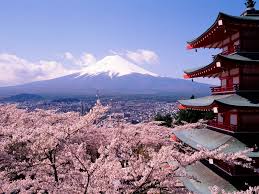
Japan is sometimes called the “land of the rising sun.” The Japanese themselves call their country Nihon or Nippon, which means “origin of the sun.” You can see an image of the sun on Japan’s flag: a red circle on a plain white background.

In many ways, Japan is old and traditional. It’s also one of the world’s most modern, and densely populated, countries.


FOOD FROM THE SEA

The Japanese islands have thousands of miles of coastline. That’s why fishing is a big industry in Japan. The traditional Japanese diet includes lots of seafood. Sashimi is a Japanese specialty of raw fish. Sushi is a cold rice dish often served with sashimi or with dried seaweed called nori.

CROWDED CITIES

Japan is home to about 127 million people. Most of them live in towns and cities in the narrow plains along the coasts. This makes Japan one of the most crowded countries in the world. How crowded? In Tokyo, some people work as people pushers. They push people onto crowded subway trains!

The people of Japan are almost all Japanese. There is little ethnic diversity. One exception is the Ainu. They are the native people of Japan. The Ainu once nearly disappeared, but today they are reviving their traditions. Most Ainu live on Hokkaido.

TOKYO

Japan has many big cities such as Yokohama, Osaka, Sapporo, and Kyoto. But Tokyo, on the island of Honshu, is by far the biggest. How big is Tokyo? It’s the biggest city in the entire world! There are more than 26 million people living in and around Tokyo. The city is the capital of Japan and the nation’s economic and cultural center.

Tokyo has something for everyone. It has more than 100 universities. It has museums such as the Tokyo Metropolitan Art Museum and the National Museum of Science. It has theaters for modern plays as well as traditional Japanese theater. It has old religious sites such as the Meiji Shrine and the Kanda Shrine. It even has an imperial palace. That’s where the emperor of Japan, the nation’s symbolic leader, still lives.

Tokyo is very modern. High-speed trains, called bullet trains, connect Tokyo to other parts of Japan. Tokyo is a center for services such as banking and insurance, new technology, and manufacturing.

SHOGUNS AND SAMURAI


For many centuries Japan was a feudal state. In feudalism, some people were given land in return for military service to a nobleman. Many common people had to work a noble’s land as servants called serfs.

By the 12th century, Japan was led by an emperor who shared power with strong military rulers called shoguns. Each shogun was supported by loyal noblemen called daimyo. The daimyo relied on the famous samurai warriors to fight for and protect them.

The samurai were much like the knights of Europe. They followed a code called bushido, or “the way of the warrior.” This meant a samurai had to be honest, polite, and brave, and be loyal to his nobleman.

The shogun and samurai disappeared in 1871, when Japan changed its political system. The changes opened up Japan to the modern world. But the shogun and samurai remain an important part of Japanese history. They are often the subject of Japanese art, novels, and films.

BASEBALL AND SUMO WRESTLING

Did you know that the most popular team sport in Japan is baseball? Baseball was first brought to Japan in 1872. It quickly caught on. Today Japan has its own professional league. In recent years, Japanese players such as Hideo Nomo and Ichiro Suzuki have become star players in the United States.

A popular traditional sport in Japan is sumo wrestling. In sumo, two large, heavy men try to shove each other out of a small ring. Sumo wrestlers follow a difficult training program and strict way of life. Each tournament begins with a ritual performed by all the wrestlers. Tradition even determines a wrestler’s dress and hairstyle.

A WEALTHY COUNTRY

Today, Japan is one of the richest countries in the world. After 1945, following Japan’s defeat in World War II, the Japanese embraced modern technology and manufacturing. Japan’s economy grew rapidly for decades.

Japanese technology remains on the leading edge, even as Japan maintains many of its traditions. Today, many of the world’s great makers of automobiles, electronics, and computer games are Japanese.
Read rest of entry Bookmark and Share

Rabu, September 16, 2009

Roman Empire

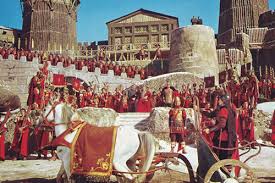
What was the biggest, richest, and most powerful nation of ancient times? The mighty Roman Empire! Based in the city of Rome, it stretched across three continents and included millions of people. The Roman Empire lasted for 500 years.

ROME’S RISE TO POWER

According to legend, the city of Rome was founded in central Italy in 753 bc. As Rome grew richer and stronger, its soldiers took over nearby land. Rome’s well-trained, disciplined army was a fearsome fighting machine.

By 30 bc, Rome controlled most of Europe, North Africa, and the Middle East. To guard these conquests, the Romans built walls and military forts. They also built excellent roads so that soldiers could march quickly to trouble spots.


THE EMPIRE BEGINS

The Roman Empire began in 27 bc. That year, a tough, clever army commander won control of Rome after a long civil war. His name was Octavian, but the Romans called him Augustus. The title Augustus meant “honored or holy leader.” Augustus became the first Roman emperor. The month of August is named after him.

Augustus saw that Rome needed new government. He appointed professionals to manage the government’s money and make sure that enough food and fresh water reached the city of Rome. He reorganized the army and set up new police and firefighting teams. He encouraged family life by paying parents to have more children. He brought back old ceremonies to honor the gods who were said to guide and guard Rome.

By the time Augustus died in ad 14, he had linked Roman lands into a single awesome organization. This was the Roman Empire.


GOVERNMENT

Emperors remained in charge of the Roman Empire for almost 500 years. Some, like Nero, were tyrants. Some, like Commodus, were stupid and cruel. But most ruled well, and a few, like Trajan, were outstanding. When Roman emperors died, they were worshiped as gods.

Each province (region) of the empire was ruled by a governor. The governor was helped by trained officials and sometimes by local kings and chiefs. Everyone in the empire had to pay Roman taxes and obey Roman laws. They had to use Roman money, as well. Roman coins showed the emperor’s portrait. That way, everyone knew who was in charge!


WHO LIVED IN THE ROMAN EMPIRE?

Rome ruled over almost 50 million people in 27 bc. They included Greeks, Egyptians, Celts, Africans, Arabs, and Jews. Traditionally, Roman society was divided into two upper classes and two lower classes. Senators belonged to the highest class, and slaves to the lowest class. Over time, class became less important than wealth. After ad 212, each free person in the empire was treated equally, as a Roman citizen.

Everywhere they ruled, the Romans introduced their own language, Latin. They also brought their technology, art, entertainment, and building styles. Many Roman temples, theaters, roads, and aqueducts (bridges that carried water) still survive in many parts of Europe, North Africa, and the Middle East.


CAPITAL OF THE EMPIRE

The city of Rome was the center of the empire. It had temples for worship, law courts, houses and apartment buildings, sports arenas, and shops. It also had crowded streets, smells, dirt, and noise. About 1 million people lived in Rome in 27 bc, making it the largest city in the world.

People moved all the time from the countryside to Rome, but many could not find work. Emperors provided food and spectacles like gladiator shows to keep them content and stop them from rioting. One Roman writer said that emperors ruled by “bread and circuses.”


CONQUEST, THEN COLLAPSE

In the early years, the Roman Empire kept on growing. But later Roman emperors found the lands of the empire too vast and too varied to control. In ad 284, the Roman Empire was divided among four rulers. Emperor Constantine united it again in ad 324. Constantine became a Christian, and gave Christianity a favored position in the empire.

Soon after Constantine’s rule, the empire was attacked by fierce tribes from the north and east. Their raids caused terror and food shortages. In ad 395, the empire split into an Eastern Empire and a Western Empire. The wealthy Eastern Empire was ruled from Constantinople (now Istanbul). It remained strong. But poor and weak Western emperors could not defend their land. The last Western emperor was forced out of Rome by invaders in ad 476. The Eastern Empire survived as the Byzantine Empire.

The fall of the Roman Empire in 476 did not mean the end of Roman civilization. The Latin language lived on, and it developed into modern European languages such as French, Spanish, and Italian. Roman art, buildings, and writings influenced later cultures.
Read rest of entry Bookmark and Share

Islam Culture

Islam is the second largest religion in the world. Only Christianity has more followers. People who follow the religion of Islam are called Muslims. Today, almost 1 billion people call themselves Muslims. Most Muslims live in a string of countries that extends from Morocco in North Africa to Indonesia in Southeast Asia.

BIRTH OF ISLAM

An Arab trader named Muhammad was the founding prophet of Islam. He lived in Mecca, a busy trading town in Arabia (now called Saudi Arabia). Mecca had temples built to honor various pagan gods. Pilgrims visited these temples to worship statues of the gods. One day, while fasting in a cave, Muhammad had a vision. He returned to Mecca to preach a new religious message. He said there is only one god, not many, and no one should worship idols (statues of gods). He called on the people of Mecca to surrender themselves to Allah, as he called God.

ISLAM GAINS POWER

Muhammad’s message angered some Meccans. In the year 622, they forced him to flee to another city, now known as Medina. That journey—or Hegira, as Muslims call it—marks the beginning of the Islamic calendar. In Medina, Muhammad became the head of the community. Soon, he led his Muslim followers back to Mecca. After a battle, the Meccans accepted Islam. Within a century, Muslims ruled an empire that stretched from India to Spain. Throughout this empire, Islam took root. The empire crumbled after a few centuries, but many people of these lands remained Muslims.

ISLAM DIVIDES

After Muhammad’s death in 632, Muslims disagreed about how the next leader should be chosen. One group came to be known as Sunnis and the other as Shias. Islam remains divided into these two branches.

By the year 900, a Muslim movement called Sufism had developed. Sufis seek a personal experience of God. Many great Muslim poets have been Sufis. Sufis helped to spread Islam long after the Islamic empire crumbled.

WHAT DO MUSLIMS BELIEVE?

The Muslim faith centers on five beliefs and practices. These are known as the five pillars of Islam. According to the five pillars, Muslims must

Accept that only one God exists and Muhammad was his messenger.
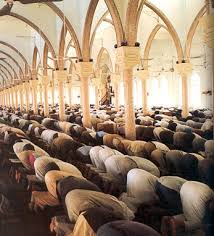
Perform certain prayers five times a day.
Fast from dawn to dusk during a month called Ramadan.
Give a portion of their wealth to the poor.
Visit Mecca at least once if they are able to.

These practices are based on the holy book of Islam, the Qur’an (also spelled Koran). Muslims believe that the Qur’an is the word of God, delivered through Muhammad. Muslim practices are also based on the Hadith—Muhammad’s own deeds and sayings as reported by his companions.

ISLAMIC LAWS AND CUSTOMS

In the early Islamic empire, the government and the religion were the same. All questions that came up were decided by religious scholars. Their decisions filled in a set of laws called the Sharia. These laws, which are also drawn from the Qur’an and Hadith, cover every aspect of life. They tell what crimes should be punished and how. They set the rules for marriage, contracts, and inheritance.
Islam is thus a complete way of life. In this way of life, men and women generally have different roles. Their activities are often kept quite separated. Families sometimes arrange marriages. Women are expected to be well covered when they go outdoors. In some countries, they have to wear a veil covering their body. In Arab countries, such a covering is called a burka.The mosque is the traditional place of worship for Muslims. Friday is their holy day, or day of worship. Islam teaches that all Muslims are equal before God. This teaching gives Muslims around the world a sense of community, no matter what country or social class they come from.
Read rest of entry Bookmark and Share

Culture Of Mesopotamia

What would life be like without writing? Or without cities? Or without seconds, minutes, and hours? We owe all of these things to the people of ancient Mesopotamia. Long, long ago, the world’s first great civilization arose there.

A FERTILE LAND


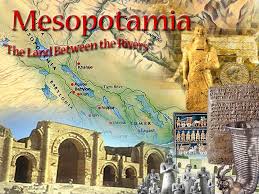
Mesopotamia means between the rivers. It is a Greek name for the land between the Tigris and Euphrates rivers in present-day Iraq, a country in the Middle East.

Ancient Mesopotamia was home to many tribes. The fertile land between the rivers was easy to farm, and large settlements grew. Mesopotamians lived in villages and raised cattle. They grew wheat, barley, and date palms.

CANALS AND DAMS

About 8,000 years ago, Mesopotamians learned how to build canals and dams. The canals carried river water to their fields. Mesopotamians began to build large, productive farms, and the population grew. The region became rich and powerful.

THE FIRST CITIES

By about 6,000 years ago, a Mesopotamian people called the Sumerians built the world’s first cities. Their cities included Eridu, Erech, Ur, and Nippur. Mesopotamians built their cities with mud bricks. They erected walls around them for protection from invaders.

Mesopotamian cities were ruled by priest-kings who lived in beautiful palaces. The most important buildings in Mesopotamian cities were huge mud-brick temples honoring local gods. The temples are known as ziggurats.

Each city controlled the surrounding land. Farmers carried crops to city markets to trade for finely woven cloth, jewelry, pottery, bronze weapons, and plows. Later cities, built by people known as the Akkadians and the Babylonians, ruled all of Mesopotamia.

The cities of Mesopotamia were complex, just like modern cities. They had homes, factories, warehouses, shops, restaurants, and religious temples. Wealthy families lived in houses surrounded by walled gardens. People often traveled in carts pulled by donkeys.

CRADLE OF CIVILIZATION

Mesopotamia is often called the cradle of civilization. Mesopotamians produced a rich culture. They developed sciences such as astronomy and mathematics. In fact, Mesopotamians invented a mathematical system for measuring time, based on units of 60. That’s why an hour has 60 minutes and a minute has 60 seconds.

Perhaps most important of all, Mesopotamians learned to write. About 5,000 years ago, they began to record laws, letters, poems, and taxes. Using reeds as pens, they made wedge-shaped marks on slabs of damp clay. This form of writing is called cuneiform. Historians believe cuneiform was the world’s first writing.
FOREIGN INVADERS

Mesopotamia’s great wealth and advanced civilization attracted people from neighboring areas.Mesopotamians fought each other, and they fought foreign invaders who wanted the land for themselves. By about 3,000 years ago, a people called the Assyrians had become powerful in Mesopotamia. Later, the region was conquered by the Persian Empire and then by Greece. From AD 641, Mesopotamia was ruled by Muslim Arabs. They built a magnificent capital at Baghdad, but it was destroyed by Mongol warriors in 1258. Mesopotamia lost its wealth. From 1534 to 1914, Mesopotamia was ruled by the Ottoman empire,a huge empire based in Turkey. Since 1932, it has been part of Iraq.
Read rest of entry Bookmark and Share

Buddhism

Can you imagine wanting nothing? How would you feel? Calm and relaxed? Cheerful? Satisfied? This is the state of mind Buddhists try to reach. Buddhism is both a religion and a philosophy. It was founded in the 6th century bc by a man known as Buddha.

WHO WAS BUDDHA?

Siddhartha Gautama, who later became known as Buddha, was born in Nepal around 563 bc. His father was a king. Young Siddhartha grew up knowing only comfort and pleasure. Then one day he discovered that suffering exists, and it troubled him. Why did people suffer, he wondered? How could they be saved?

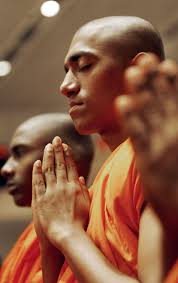
Siddhartha went on a quest for answers. Holy men advised him that giving up all pleasures and comforts would release him from suffering. Siddhartha tried this, but it didn’t work. Finally, he sat under a bo tree and meditated—that is, he emptied his mind of all thoughts in an effort to concentrate. Gradually, he came to enlightenment, awareness of the religious truth he had been seeking. He was then known as Buddha. Buddha means the “enlightened one.”

WHAT DID BUDDHA TEACH?

Buddha taught that happiness lies neither in pleasure nor in self-denial. He advised people to follow a middle way between extremes. He preached what he called the Four Noble Truths: first, that life is suffering; second, that suffering comes from desire, or attachment to the world; third, that attachment can be ended; and fourth, that the way to end it is to follow the Eightfold Path.

The Eightfold Path consists of eight things people should do or have in their lives. They include right views, right intention, right speech, right action, right effort, right-mindedness, and making a living in the right way. The eighth step is daily meditation. Buddha said people who follow this path can achieve a state of happiness called nirvana. As a result, they escape the world and its suffering forever. Those who do not achieve nirvana are going to be born again after death in another form and will have to start over.

HOW DID BUDDHISM GROW AND CHANGE?

Buddha’s followers were monks. They lived apart from the world, in monasteries. They shaved their heads, wore orange robes, and lived a Buddhist life.

About a hundred years after Buddha died, his followers started writing his teachings down in books called sutras. Soon after this, Buddhism split into two branches. The Theravada Buddhists believe each person should strive to reach nirvana on his or her own. The Mahayana Buddhists believe Buddhists should seek help from bodhisattvas. A bodhisattva is someone who has already reached enlightenment.

HOW DID BUDDHISM SPREAD?

In the 3rd century bc, an Indian king named Ashoka became a Buddhist. He sent Buddhist teachers far and wide. Buddhism spread over the next 500 years. It took root in China, Korea, Japan, Southeast Asia, and Sri Lanka.
As it spread, Buddhism took new forms. Buddhists of Tibet regard their leader, the Dalai Lama, as a living Buddha. In Japan, Zen Buddhists emphasize meditation and work.Most Buddhists today live in East Asia and Sri Lanka. Buddhism is also finding new followers in India, where it had once died out. Buddhists can now be found all around the world,including in the United States and Canada.
Read rest of entry Bookmark and Share

Senin, September 14, 2009

Maya Civilization

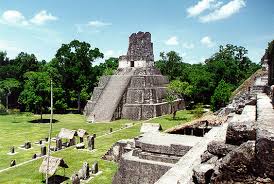
The ruins of spectacular stone cities still watch over parts of Mexico and Central America. A Native American people called the Maya built these ancient cities more than 1,000 years ago.

The Maya created a brilliant civilization. They built massive stone pyramids and carved beautiful sculptures. They made great advancements in astronomy and math. The Maya recorded their history and discoveries using hieroglyphics, a form of picture writing.


A LONG HISTORY

Records of the Maya go back nearly 4,000 years. But the Maya civilization reached its peak from about 300 AD to 900 AD. During this time, the Maya controlled lands in southern Mexico, Guatemala, Belize, Honduras, and El Salvador.

Today, descendants of Maya people still live in parts of Mexico and Central America. Many still wear traditional clothes and speak their ancient languages.


INDEPENDENT CITIES

The ancient Maya lived in independent cities. Each city was ruled by its own king. Cities governed the villages and farmland around them. The biggest cities were Palenque, Tikal, Copán, and Chichén Itzá.

At the center of every Maya city was a large square, or plaza. Huge stone buildings bordered the plaza. These included tall pyramids with temples on top, palaces, and courts for playing a sacred ball game. Priests walked up steps of the pyramids to perform religious ceremonies in the temples. The Maya covered the walls of their buildings with brightly colored paintings.

Maya cities were home to many skilled workers. They included architects, weavers, potters, feather workers, and stone carvers. Merchants brought valuable goods to the cities from distant lands. Maya merchants traded jaguar pelts, jade, green parrot feathers, dyes, cloth, wax, honey, tools, and many other goods.


EXPERT FARMERS

Outside the cities, farmers lived in small villages near their fields. They were expert farmers and grew many different crops. The most important crop of all was maize (corn). Women ground the maize into a meal and baked it into flat cakes.

Other important crops included beans, squash, avocados, chili peppers, sweet potatoes, melons, and papayas. The Maya also grew cacao beans to make a chocolate drink. The Maya prized cacao beans. They traded the beans as a form of money.


RELIGIOUS BELIEFS

The Maya worshipped many different gods. Among the most important gods were Itzamna, the sky god, and Yum Kaax, the maize god. The Maya held many religious ceremonies in their city centers.

In some ceremonies, the Maya made sacrifices to the gods. They might sacrifice the life of a dog, turkey, or other small animal. Sometimes, for a very important ceremony, the Maya sacrificed a person. The victim was often painted blue and then sacrificed by a priest on top of a pyramid.


A GAME OF LIFE AND DEATH

The Maya played a sacred ball game on long courts in their city centers. The game involved two teams of players and a solid rubber ball. Players tried to hit the ball through a stone ring with their hips. They were not allowed to touch the ball with their hands or feet. The game was fast and dangerous. Players wore special padded clothing to protect them.

The ball game was not just a sport. It was also a sacred religious event. On certain occasions, the players who lost the game would be sacrificed to the gods.


ASTRONOMY AND MATH

The Maya developed astronomy and math to a high level. Maya astronomers carefully observed the positions of the planets and stars. Based on Earth’s orbit around the Sun, they learned that a year was 365 days long.

The Maya invented a system of math based on the number 20. Using this system, Maya astronomers designed a calendar that divided the year into 18 months of 20 days each. To these 360 days, the Maya added 5 “unlucky” days at the end of the year.

The Maya calendar was complicated and could only be read by people with special training. But for many centuries, the Maya calendar was the most accurate calendar in the world!


KEEPING RECORDS

The Maya developed an advanced form of writing using picture signs called hieroglyphics. They kept records of their myths, history, discoveries, and religious beliefs. They carved these records on buildings and on stone monuments called stelae.

The Maya also made books from long folded sheets of bark paper. Folded books like these are called codices. Only four Maya codices still exist. They cover subjects such as astronomy, the calendar, and religious ceremonies.


THE END OF THE MAYA

In about 900 AD, the Maya abandoned the cities of Palenque, Tikal, and Copán. No one knows why the Maya left these great cities, all located in the Guatemalan lowlands. Some scientists believe a long drought (lack of water) drove the Maya out.

Some Maya people moved north into the Yucatán peninsula in Mexico. There, they built the cities of Chichén Itzá and Mayapán. In the early 1500s, the Spanish invaded Mexico and conquered the remaining Maya.


Read rest of entry Bookmark and Share

Inca Empire, a Complex Culture

The Inca ruled a large, wealthy empire in South America. They accomplished amazing feats of engineering and built a complex civilization.

The Inca had no written language, but they still recorded many details about their life. They kept track of gold, land, crops, and other things by using knotted strings. The length and color of the strings, and the spacing of the knots, all had meaning. Specially trained people could “read” the strings.


WHAT WAS THE INCA EMPIRE?

The Inca Empire was a vast kingdom in the Andes Mountains of South America. Inca emperors controlled a huge area and ruled millions of people. It was the largest civilization in South America before the arrival of Europeans.

According to Inca legend, the Inca first lived near Lake Titicaca in southeastern Peru. The legend says the first Inca emperor, Manco Capac, led the Inca north to the fertile valley of Cuzco. They arrived in Cuzco (in southern Peru) about ad 1200 and conquered the people there. Cuzco became the Inca’s capital city.

Over time, the Inca conquered many neighboring groups. The Inca Empire grew large and rich. Centered in Peru, the empire extended over high mountains, grassy plateaus, fertile valleys, jungles, and coastal land. It covered parts of what are now Ecuador, Bolivia, Chile, and Argentina.


REMARKABLE BUILDINGS

The Inca constructed impressive buildings out of stone. The Inca did not use the wheel. So to move large boulders, they used wooden rollers and ramps made of dirt. They shaped the boulders into blocks with axes and smoothed them with sand and water. Then they stacked the blocks to make walls, arches, and other structures.

The Inca shaped their building blocks with great accuracy. The blocks fit together so tightly that a knife will not fit between them! For this reason, they didn’t need to use mortar (a binding material put between blocks or bricks).

The Inca built many large temples, palaces, plazas, and forts. Cuzco itself was a marvel of Inca engineering. Gold plating nearly covered Cuzco’s great Temple of the Sun. In the temple’s courtyard, gold carvings showed scenes from Inca life. Gold corn appeared to grow out of golden soil. Golden llamas grazed on golden grass.

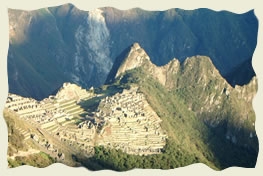
Another spectacular Inca city was Machu Picchu. It was built on a ridge high in the Andes, above Cuzco. The ruins of the city were discovered in 1911.


ROADS, BRIDGES, AND TERRACES

To rule their large kingdom, Inca emperors built a network of stone roads that extended 10,000 miles (16,000 kilometers). Working in relays, runners used these roads to carry messages up to 250 miles (400 kilometers) in a single day. Government officials could travel the roads to every village in the empire.

To span the deep river gorges in the mountains, the Inca built rope bridges. The bridges were amazingly durable. One rope bridge over a dangerous ravine was used for more than 500 years!

The mountains posed a challenge for farming. The Inca built stone walls in steep valleys to create level fields, called terraces. These terraces extend up the sides of mountains like giant staircases. In some areas, the Inca built canals to bring water to the terraces.


LIFE AS AN INCA

Inca society was strictly organized. The emperor and his royal family were at the top of Inca society. The Inca believed the emperor was descended from the Sun god, Inti.

Below the emperor came the nobility. These Inca were related to the emperor. They held the most important positions in the government, the military, and in religious life. Peasants who farmed the land were at the bottom of Inca society.

The Inca worshiped the creator god, Viracocha, the Sun god, Inti, and other lesser gods. The bodies of dead rulers were kept in shrines. Dead rulers had servants and were consulted on daily affairs—as if they were still alive.

Priests were important in Inca life. In sacred rituals, priests often sacrificed llamas or guinea pigs to the gods. Sometimes they sacrificed children or women.


ARTS AND CRAFTS

Inca craft workers used copper and bronze to make tools and ornaments. They used gold and silver for jewelry and for everyday objects such as nails, combs, and dishes for the nobility. Goldsmiths were so respected that they lived in a special neighborhood and paid no taxes.

The finest Inca art has not survived. Spanish conquerors melted down these objects and shipped the gold back to Spain.

The Inca had extensive knowledge of plants for food and medicine. They developed many of the plants we eat today. These include types of corn, potatoes, tomatoes, squash, beans, and peppers. To the Inca, pepper plants were sacred. In fact, peppers were so valuable they could be used as money.


CONQUERED BY THE SPANISH

Inca civilization was most powerful in the late 1400s. In 1532, the Spanish explorer Francisco Pizarro and 180 Spanish soldiers landed on the coast of Peru.

At first, the Inca believed Pizarro was their god, Viracocha. Pizarro and his men seized the Inca emperor. To save his own life, the emperor offered Pizarro enough gold to fill a room. But the Spaniards killed the emperor and took over the Inca Empire.

The Spanish conquerors looted Inca treasures and made the Inca into slaves. Many Inca died from mistreatment and from European diseases. Other Inca fled.

Today, about 8 million descendants of the Inca live in the lands of the former Inca Empire. Many still speak Quechuan, the ancient Inca language. They still follow many Inca beliefs and customs.
Read rest of entry Bookmark and Share

Aztec Empire, A great native American culture

Hundreds of years ago, a towering temple stood at the center of what is now Mexico City. This Great Temple was a symbol of the power of the Aztec Empire—an empire that stretched across much of Mexico.

WHO WERE THE AZTECS?

The Aztec Empire was the last in a series of great Native American civilizations in Mexico. Before they became powerful, the Aztec people wandered from place to place and lived by hunting animals and gathering wild plants. They roamed a part of northern Mexico called Aztlán. The name Aztec comes from Aztlán.

In the 1200s, the Aztecs moved to central Mexico. But they found that the best land there was already taken by other people. The only place left was two small islands in a shallow, salty lake called Lake Texcoco. So the Aztecs settled there and started farming.


A DAZZLING CAPITAL

In 1325, the Aztecs built their capital city, called Tenochtitlán, on those islands. To make more land for farming, they created artificial islands by filling the lake with soil.

Eventually, Tenochtitlán became an impressive city of plazas, canals, palaces, pyramids, and houses. There was even a zoo. In the 1500s, perhaps 200,000 people lived in Tenochtitlán. It may have been the biggest city in the world at that time.


BUILDING AN EMPIRE

By the 1500s, the Aztecs were very powerful. But it was not always that way. Earlier, in the 1200s and 1300s, the Aztecs had little power and got little respect. They were forced to give a portion of their food and other valuable goods to their more powerful neighbors.

But the Aztecs grew stronger. In the early 1400s, they formed an alliance, or friendship, with the people of two other cities in the area. The alliance soon defeated all their enemies in central Mexico. By the late 1400s, the alliance ruled most of lower Mexico. Tenochtitlán became the most important city in the growing empire. The Aztecs were now the masters of central Mexico.


HOW DID THE AZTECS LIVE?

Aztec society had several classes of people. At the top was an upper class of priests, warriors, and administrators. Below them were merchants, craft workers, farmers, and laborers. Only upper class people could own land. People in the other classes were given land to use, but they had to pay the empire for that privilege.

No matter which class they were in, the Aztecs believed their rulers were like gods. Their two most powerful rulers were Montezuma I and Montezuma II.

Religion played a very important part of Aztec life. The Aztecs believed in many gods. The most important was Huitzilopochtli, the god of war and the Sun. The Aztecs believed that Huitzilopochtli and other gods needed human blood to stay strong. So, they sacrificed thousands of people to the gods at the Great Temple. Most victims were prisoners of war.


HOW DID THE AZTEC EMPIRE END?

In 1519, the Aztecs and their ruler, Montezuma II, controlled a vast area. They probably thought their empire would last forever. But they were wrong.

That year, a Spanish explorer named Hernán Cortés landed on the east coast of Mexico with about 600 men. Cortés was looking for gold and glory. People on the coast told him about the Aztecs and their fabulous capital. That was all Cortés had to hear. He set off to conquer the Aztecs. He recruited hundreds of people who were enemies of the Aztecs to help him.

In August 1521, Cortés defeated the Aztecs. The Spaniards took the Aztecs’ gold and other treasures and leveled Tenochtitlán. They built a new city, Mexico City, on its ruins
Read rest of entry Bookmark and Share

Ancient Greek Culture

Without the Greeks, who would have given us science, technology, democracy, politics, drama, and history? All of these words, as well as the ideas they represent, originated in ancient Greece.

WHERE WAS ANCIENT GREECE?

Greece is a mountainous peninsula that juts into the Mediterranean Sea. It includes hundreds of rocky islands off the coast. But the people of ancient Greece settled over a much wider area, from southern France to Asia Minor (now Turkey). Everywhere they went, they brought their language and traditions with them.


WHEN DID GREEK CIVILIZATION BEGIN?

The first Greek civilization developed on the Mediterranean island of Crete around 2200 bc. This civilization was called Minoan after a legendary ruler of Crete named Minos. The Minoans lived by farming, fishing, and seafaring. Their rulers built huge, brightly painted palaces. A magnificent palace at Knossos may have belonged to King Minos. The Minoans invented a way of writing, but no one today can read it.

Soon after 1500 bc, Minoan civilization collapsed. Mycenae, a city on mainland Greece, rose to power. The Mycenaeans built palaces fortified with massive walls, and they rode in chariots. They must have been rich because beautiful objects of gold were found in their graves. The Mycenaeans were warriors. They fought each other, and they went to war in distant places, such as Troy in Asia Minor.

These wars were disastrous for Greece. From 1000 to 750 bc, farming, craftwork, and trade suffered. People even forgot how to write!


HOW DID GREECE REBUILD?

Slowly, Greece recovered. The Greek people organized themselves into self-governing communities called city-states. Each city had homes, workshops, temples devoted to the Greek gods, markets, schools, sports arenas, and meeting places.

A city-state also controlled the surrounding countryside. In villages and on farms, Greek families grew olives, grapes, and grain for food. They raised sheep and goats for hides and wool.

Along the coast, people lived by fishing or by trading with other Mediterranean lands. They sold olive oil, wine, timber, and craft products. The Greeks were especially known for their excellent metalwork and painted pottery.

The Greeks liked debating, questioning, and exploring new ideas. They admired logical arguments and scientific proof. They believed in justice and human dignity. But they were not all equal. Some Greeks were born free. Others were slaves with no rights. Greek men had freedom to work, study, and travel. Women spent their lives at home. They wove cloth, bore children, and cared for their families.

The Greeks also believed in gods who controlled human lives. They honored the gods and made offerings to them. In return, they hoped for blessings. To please the gods, city-states held religious festivals, with competitions in music, dance, drama, poetry, and sports. The Olympic Games began as a religious festival of this kind, probably in 776 bc.


WHICH WAS THE STRONGEST CITY-STATE?

By around 500 bc, two city-states were supreme. Sparta was famous for its fearsome fighting men. It had a powerful ruling council, secret police, and spies. All its citizens—including women and children—were trained to be tough and brave. Slaves grew food.

Athens was a democracy. All adult male citizens had the right to elect leaders, serve on juries, and debate government plans. Athenians prized learning and the arts. They asked the best artists, architects, philosophers, and writers to live and work in their city. From 480 to 359 bc, Athens collected tribute (payments) from smaller, weaker Greek cities. It used this money, and wealth from its silver mines, to buy warships. It also rebuilt the center of the city in magnificent style, with temples, statues, law courts, theaters, and strong walls.

From 490 to 479 bc, Athens and Sparta fought together against invaders from Persia. But then they became rivals. From 431 to 404 bc, they fought each other in a bitter war. The war severely weakened both powers.


HOW DID GREEK POWER END?

In 338 bc, Greece was conquered by Macedonia, a kingdom to the north. City-states lost their political power, but Greek civilization continued and spread to many distant lands. Under Macedonian rule, Greek philosophers, mathematicians, and scientists made discoveries that are still useful today.

In 146 bc, Roman armies invaded Greece. Roman leaders admired Greek achievements, and so Greek ideas and artistic styles spread still further, through the lands of the Roman Empire. In ad 395, Greece became part of the Byzantine Empire. It was ruled from the city of Constantinople (now Istanbul, Turkey). Greek language, knowledge, and technology remained important until the Byzantine Empire fell to Ottoman Turks in 1453.


THE INFLUENCE OF ANCIENT GREECE

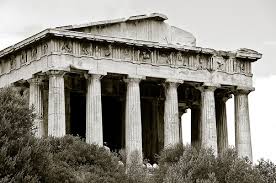
Today, Greek civilization still shapes the way people think, speak, study, govern, design buildings, and spend their leisure time. Many words in the English language come from Greek roots. Questions raised by Greek philosophers are still debated. Greek plays are read and performed. The Olympic Games are held every four years, just as in ancient Greece. Many of our buildings—especially those with tall, round columns—are modeled after Greek buildings. The influence of ancient Greece is felt throughout Europe and in all the lands that European nations once ruled.
Read rest of entry Bookmark and Share

Ancient Egyptian Culture

Pyramids and pharaohs, mummies and magic, picture writing on papyrus—ancient Egypt had all this, and much more. Rich, powerful, and peace-loving, this North African kingdom was home to a splendid civilization that lasted 3,000 years, from about 3300 bc to 30 bc.

RED LAND, BLACK LAND

Ancient Egypt was a vast territory, stretching 700 miles (1,100 kilometers) southward from the Mediterranean Sea. Most of it was hot, dry, and dusty. The Egyptians called it Deshret (red land). But the world’s longest river, the Nile, runs through this desert. Every year, the river flooded the surrounding land. The floods left sticky, smelly mud covering the land along the riverbanks. Egyptians called the riverside area Kemet (black land). This land was very fertile. About 5000 bc, the ancient Egyptians built some of the world’s first farms and villages there.


THE GIFT OF THE NILE

Egypt was sometimes called “the gift of the Nile.” All Egyptian life depended on the river. Farmers dug ditches to bring its water to fields of wheat, grapes, and onions. Rich nobles, town traders, and poor country families all built homes made of sun-dried river mud. Craftspeople shaped clay from the Nile into pottery, and wove cloth from the flax plant that grew on its banks. Families caught fish and river birds for food. Children played in riverside pools, but they had to watch out for killer crocodiles!


LIFE IN ANCIENT EGYPT

Most ancient Egyptian homes had just two or three rooms, with workspace on the roof. Rich people built larger houses, with painted walls, fine furniture, gardens, and pools. In poor families, women wore rough homemade dresses and men wore cloths tied around the hips. But the rich could afford curled wigs, makeup, colored clothes, and jewels. They had servants and slaves to work for them.

Rich or poor, all Egyptians valued family life. They married young and had many children. Families worked together and played together. Egyptian people liked games, stories, music, dancing, and holiday feasts and parades.

The ancient Egyptians believed in magic and many gods. People built little shrines to their favorite gods. They wore amulets (charms), and recited prayers and spells. They also built statues representing gods. The most famous is the Great Sphinx of Giza. This huge statue with the body of a lion and the head of a man still stands today.


HIEROGLYPHS AND PAPYRUS

The ancient Egyptians had a complex system of writing known as hieroglyphics. This form of writing looks like columns of little pictures. These picture-symbols are called hieroglyphs. Not everyone could read hieroglyphs. Reading and writing was the job of special scholars called scribes.

Scribes wrote in hieroglyphs on papyrus, a kind of paper made from reeds. This was some of the world’s first writing! Pages of poems, songs, stories, math, science, and astronomy have all been preserved.


POWERFUL PHARAOHS

Egyptian kings were known as pharaohs. Egyptians said the pharaohs were the children of a god. They were links between heaven and Earth. Pharaohs were the chief priests, lawmakers, and army commanders of the kingdom. They gave orders to governors, judges, tax collectors, and soldiers. They made treaties with foreign rulers and controlled trade with other countries. All Egyptians had to pay taxes to them or work on their building projects.


PYRAMID TOMBS AND MUMMIES

Some of the pharaohs had great pyramids constructed. A pyramid was an enormous stone tomb. Building a pyramid was a tremendous project. Thousands of people worked for many years to construct one. Some of the stone blocks that make up the pyramids weigh more than two elephants!

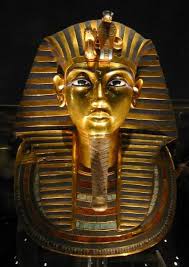
The ancient Egyptians believed that their bodies must survive for life after death. They had their bodies made into mummies. Mummies were preserved, dried, and wrapped in cloth. Egyptians hoped this would help their spirits survive after they died. Pharaoh mummies were placed in pyramids or great tombs surrounded by treasures to be used in the afterlife. Guides to the world of the dead written in hieroglyphs on papyrus have been found with mummies. Most royal mummies, and the treasures buried with them, were stolen by grave robbers long ago.


LASTING REMINDERS OF THE PAST

Egypt’s rich civilization attracted many invaders. But it survived for thousands of years. In 30 bc, Egypt’s last pharaoh—Queen Cleopatra—killed herself rather than surrender to Roman conquerors. That was 2,000 years ago. But ancient Egypt has not been forgotten. Some mummies were so well preserved that they are still around. Some of them are in museums. And many of ancient Egypt’s greatest monuments, including many pyramids, are still standing. You can visit them!
Read rest of entry Bookmark and Share

Kamis, September 10, 2009

As the old man walked the beach at dawn

As the old man walked the beah at dawn, he noticed a young man ahead of him picking up starfish and flinging them into the sea. finally catching up with the youth, he asked him why he was doing this. the answer was that  the stranded starfish would die if left until the morning sun.

"But the beach goes on for miles and there are millions of starfish ," countered the other. "how can your effort make any difference?"
the young man looked at the starfish in his hand and then threw in to safety in the waves. "it makes a difference to this one ," he said.
Read rest of entry Bookmark and Share

Hear somebody

When i hear somebody sigh, "life is hard", i am always tempted to ask, "compare to what?"
Read rest of entry Bookmark and Share

Rabu, September 09, 2009

Do you know ?

As long as a secrets is secure in your heart, you are its master, and you can ride on it, as soon as you disclose it, it becomes your master and rides on you

Read rest of entry Bookmark and Share

Minggu, September 06, 2009

Unique number plate from northumbrianumbers.com

Either vehicle or a motor car except as a means of transportation has becomed one of the Prestige goods. People will increasingly "Confidence" when using a vehicle with famous brands, and also with the latest models.
In addition to brands and models are also other things that can make users feel different vehicle is Plat Number. Number plates can also raise the prestige of the owner. With a unique number according to the vehicle owners unique and special impression grew thicker. For example, plates that have the same number with the name, then the vehicle owner will feel more confident. For example a name RISKI, would be very proud if you could have a plate R 15 KI.

One of the websites on the Internet that provides services Special registration plate number (private plate) or personalised number plates is http://www.northumbrianumbers.com. Founded in 1995 and headquartered in the Border Counties of Northumberland or commonly known as "The Secret Kingdom", Northumbria Numbers pride themselves on giving the best service in the Cherished Numbers business.it have supplied thousands of private number plates to thousands of happy customers over the last decade.Please feel free to contact them between 9.00am and 9.00 pm on any of the numbers below:-
01670 786151 or 07730 911570
( Calls Recorded )
Fax No:01670 786177

In addition we can order a special number plate on the web, we also sell a special number plates that we have.

Before ordering, you can try a combination of private number plates for you want.

Make you who like to use the personalised number plates do not harm your special order at this website.
Read rest of entry Bookmark and Share

Jumat, September 04, 2009

No wrong numbers

Mr mumuw potter has a garage in silbury and now he has just bought another garage in pinhurst. pinhurst is only 4 miles from silbury, but mrs mumuw cannot get a telephone for his new garage, so he has just bought twelve pigeons. yesterday, a pigeon carried the first message from pinhurst to silbury. the bird covered the distance in three minutes. up to know,  mr mumuw has sent a great many requests for spare parts and other urgent message from one garage to the other. in this way, he has begun his own private 'telephone' service
Read rest of entry Bookmark and Share

A new house

I had a letter from my sister yesterday. she lives in nigeria. in her letter, she said that she would come to england next year. if she comes, she will get a surprise. we are now living in a beautiful new house in the country . work on it had begun before my sister left. the house was completed five months ago. in my letter, i told her that she could stay with us. the house has many large rooms and there is lovely garden. it is a very modern house, so it looks strange to some people. it must be the only modern house in the district
Read rest of entry Bookmark and Share
 

Info blog

Add to Technorati Favorites Art Blogs - Blog Catalog Blog Directory negative effects television Motives Media - Technology Blogs - Iconoclock.com - Polaris Print

Twitter Update

Technology news | Computer, Internet, and Blogging Information Copyright © 2009 FreshBrown is Designed by Simran